Dec 032011
 

Η Judith Arcana, ποιήτρια, συγγραφέας, ακαδημαϊκός και ακτιβίστρια. Σε ένα ποίημα, συνεισφορά της στο occupywriters.com

iAction

We sprayed graffiti on our Facebook walls

tweeted outrage to the websites of senators

marched around our living rooms with Wii

zapped cyber-petitions to the Pentagon –

some of us phoned in flashmobs; lots of us

taped everything for youtube. We were virtually

unstoppable! Actually though, some of us did

hit the pause button. When sidewalk time

came, hitting the asphalt, fault lines opened

up along the edges of our keyboards, striking

letters into questions older units used to ask –

like, to be or not to be – you know that one?

Whether to take arms against a sea of troubles

and, by opposing, end them? Question is,

is there – I mean, like, now – an app for that?


Dec 022011
 

Από μια άλλη περιοχή του κόσμου μας, αλλά μήπως αφορά και τη δική μας πραγματικότητα;

Πως βιώνουμε τη βία; Βία στον κόσμο, βία στον εσωτερικό μας κόσμο, στις σχέσεις μας, τις κοινωνικές τις προσωπικές…

Πότε είμαστε ο στρατός, πότε η εξουσία; Πότε είμαστε το παιδί; Πόσο ακούμε την αλήθεια μας; Πόσο της δίνουμε φωνή; Πόσο τη φιμώνουμε;

Η επίγνωση μόνο δεν αλλάζει τον κόσμο μας. Αλλά -που ξέρεις;- μπορεί να έχει και περισσότερες δυνατότητες από όσες φανταζόμαστε.

Nov 212011
 

18 Νοεμβρίου στο University California Davis. Οι φοιτητές διαμαρτύρονται ειρηνικά και η αστυνομία τους ψεκάζει με χημικά. Το βίντεο διαδόθηκε γρήγορα μέσα από το internet, οι αντιδράσεις πολλές και ποικίλες. Οι φοιτητές ζήτησαν την παραίτηση της πρυτάνεως και ο αναβρασμός συνεχίζεται.

Δες τα δυο βίντεο. Στο πρώτο, η δράση της αστυνομίας και η αντίδραση των φοιτητών (δες το βίντεο ως το τέλος) και στο δεύτερο η σιωπηλή αντίδραση των φοιτητών στην έξοδο της Chancellor Katehi από το campus. Η απίστευτη δύναμη της σιωπής.

Η σιωπή δεν είναι πάντα ήττα. Δες το βίντεο και θα καταλάβεις.


Nov 202011
 

(το βίντεο έχει και ελληνικούς υπότιτλους – επιλογή από το μενού στο βίντεο)

Any thought that you have had about yourself,
however deflated or inflated,
is not who you are.
It is simply a thought.

The truth of who you are cannot be thought,
because it is the source of all thoughts.
The truth of who you are cannot be named or defined.
Words like soul, light, God, truth, self, consciousness,
the universal intelligence, or divinity,
while capable of evoking the bliss of the truth,
are grossly inadequate as a description of the immensity of who you truly are.

However you identify yourself:
as child,
adolescent, a mother, a father, an older person, healthy person, sick person,
a suffering person, or an enlightened person –
always, behind all of that,
is the truth of yourself.
It is not foreign to you.
It is so close that you cannot believe it is you.

The truth of who you are is untouched by any concept of who you are,
whether ignorant or enlightened,
worthless or grand.
The truth of who you are is free of it all.
You are already free
and all that blocks your realization of that freedom
is your own attachment to some thought of who you are.
This thought doesn’t keep you from being the truth of who you are.
You already are that.
It separates you from the realization of who you are.

I invite you to let your attention dive into what has always been here,
waiting openly for its own self-realization.
Who are you, really?
Are you some image that appears in your mind?
Are you some sensation that appears in your body?
Are you some emotion that passes through your mind and body?
Are you something that someone else has said you are,
or are you the rebellion against something that someone else has said you are?
These are some of the many avenues of misidentification.
All of these definitions come and go,
are born and then die.

The truth of who you are does not come and go.
It is present before birth, throughout a lifetime, and after death.
To discover the truth of who you are is not only possible
it is your birthright.
Any thoughts that this discovery is not for you,
now is not the time,
you are not worthy,
you are not ready,
you already know who you are,
are just tricks of the mind.

It is time to investigate this I-thought
and see what validity it really has.
In this examination,
there is an opening for the conscious intelligence that you are
to finally recognize itself.

The most important question you can ever ask yourself is:
Who am I?
In a certain way, this has been an implicit question asked throughout every stage of your life.
Every activity,
whether individual or collective,
is motivated at its root by a search for self-definition.
Typically, you search for a positive answer to this question
and run away from a negative answer.
Once this question becomes explicit,
the momentum and the power of the question
direct the search for the true answer,
which is open-ended, alive,
and filled with ever deepening insight.

You have experienced both success and failure.
After a certain stage,
early or late,
you realize that, who you are,
however that is defined,
is not satisfying.

Unless this question has been truly answered,
not just conventionally answered,
you will still be hungry to know.
Because, no matter how you have been defined by others,
well-meaning or not,
and no matter how you have defined yourself,
no definition can bring lasting certitude.

The moment of recognizing that no answer has ever satisfied this question is crucial.
It is often referred to as the moment of spiritual ripeness,
the moment of spiritual maturity.
At this point,
you can consciously investigate who you really are.
In its power and simplicity,
the question Who am I?
throws the mind back to the root of personal identification,
the basic assumption: I am somebody.
Rather than automatically taking that assumption as the truth,
you can investigate deeper.

It is not difficult to see that this initial thought, “I am somebody”,
leads to all kinds of strategies:
to be a better somebody, a more protected somebody,
a somebody with more pleasure, more comfort, more attainment.
But when this very basic thought is questioned,
the mind encounters the I
that is assumed to be separate from what it has been seeking.
This is called self-inquiry.

This most basic question: Who am I?,
is the one that is the most overlooked.
We spend most of our days telling ourselves or others
we are someone important,
someone unimportant, someone big, someone little,
someone young, someone old,
never truly questioning this most basic assumption:

Who are you, really?
How do you know: that is who you are?
Is that true? Really?
When you turn your attention toward the question:
Who am I?
perhaps you will see an entity that has your face and your body.
But who is aware of that entity?
Are you the object,
or, are you the awareness of the object?
The object comes and goes.
The parent, the child, the lover,
the abandoned one, the enlightened one, the victorious one,
the defeated one.
These identifications all come and go.
The awareness of these identifications is always present.

The misidentification of yourself as some object in awareness
leads to extreme pleasure or extreme pain
and endless cycles of suffering.
When you are willing to stop the misidentification
and discover directly and completely that you are the awareness itself
and not these impermanent definitions,
the search for yourself in thought ends.
When the question Who?
is followed innocently, purely,
all the way back to its source,
there is a huge, astounding realization:
There is no entity there at all!

There is only the indefinable, boundless recognition of yourself
as inseparable from anything else.
You are free.
You are whole. You are endless.
There is no bottom to you, no boundary to you.
Any idea about yourself appears in you
and will disappear back into you.

You are awareness,
and awareness is consciousness.
Let all self-definitions die in this moment.
Let them go, and see what remains.
See what is never born and what does not die.
Feel the relief of laying down the burden of defining yourself.
Experience the actual non-reality of the burden.
Experience the joy that is here.
Rest in the endless peace of your true nature
before any thought of I arises.
 

Nov 192011
 

Ένα πολιτικό θέαμα των «Μοντέρνων Καιρών»

Δυο λόγια για την παράσταση:

Πρόκειται για ένα σπονδυλωτό, σύνθετο θέαμα, όπου οκτώ ηθοποιοί θα ερμηνεύσουν πολυάριθμους ρόλους, με ακαριαίες αλλαγές – ορισμένες μάλιστα επί σκηνής – κοστουμιών και ερμηνείας. Ένα πολιτικό θέαμα με πολύ μουσική, τραγούδι, και χορό. Στην παράσταση υπάρχει συνοδεία πιάνου και τα τραγούδια είναι ζωντανά.

Η υπόθεση:

Ένα ταξίδι στο χρόνο, από το σήμερα, στην εποχή του μεσοπολέμου, πιο πίσω στις αρχές του 20ου αιώνα και από κει πάλι στο σήμερα.

Με θεατρικά κείμενα που βγήκαν από αυτοσχεδιασμούς του θιάσου και με υλικό από ποιητικά, φιλοσοφικά, πολιτικά κείμενα και δοκίμια των: Λόρκα , Μπρεχτ, Φουκώ, Μπουκόφσκι, Λειβαδίτη, Ρόζας Λούξεμπουργκ, Κλάρας Τσέτκιν, Έμας Γκόλντμαν, Έλλης Παππά, κ.α.

Κακοποιοί, φιλόσοφοι, επαναστάτες, σκηνές καμπαρέ, κούκλες, άνθρωποι-πουλιά, θα παρελάσουν από μπροστά μας για να μας οδηγήσουν σε μια θεατρική βραδιά που θα μας ψυχαγωγήσει, θα μας συγκινήσει, θα μας συναρπάσει, θα μας κάνει να σκεφτούμε, θα μας απελευθερώσει από τη σημερινή μιζέρια, για να οραματιστούμε μαζί ένα πιο φωτεινό μέλλον που θα ανήκει σε έναν «ανθρώπινο» άνθρωπο.

Για να συνειδητοποιήσουμε ότι μπορούμε να αλλάξουμε την ιστορία, να δημιουργήσουμε μια αλλιώτικη ιστορία για την ανθρωπότητα, μια καλύτερη ιστορία, μια ιστορία που να μας αξίζει.

Όπως λέει και μια φράση της παράστασής μας: «Για να γίνει το μέλλον, στο μέλλον, ανατέλλον».

Οι συντελεστές της παράστασης:

Ο συγγραφέας: Συλλογική δημιουργία του θιάσου. Η σύλληψη και η τελική διαμόρφωση του κειμένου έγινε από τον Κώστα Νταλιάνη.

Σκηνοθεσία: Νταλιάνης Κώστας

Μουσική σύνθεση: Γιατράς Διονύσης

Χορογραφίες: Ζαφειροπούλου Λίλα

Τους ρόλους ερμηνεύουν οι ηθοποιοί:
Ανυφαντή Ειρήνη
Γεωργοσόπουλος Βασίλης
Καραμάνη Κέλλυ
Κολοκυθά Μαρία
Νταλιάνη Φάνια
Παπασπύρου Εβίτα
Σειραδάκη Κλαίρη
Τσεργάς Νίκος
Στο πιάνο:
Κατσιδονιώτης Δημήτρης

Η παράσταση θα ανέβει στο θέατρο “OLVIO”, Ιεράς Οδού 67 και Φαλαισίας 7, Γκάζι, τηλ: 210.3414.118

Από τις 18 Νοέμβρη 2011 έως 8 Απριλίου 2012

ημέρες και ώρες παραστάσεων:
Παρασκευή & Σάββατο 9 μμ  – Κυριακή 8 μμ

Εισιτήριο: 18 ευρώ
Φοιτητικό, νεανικό κάτω των 25, άνω των 65, ΑΜΕΑ, : 13 ευρώ
άνεργοι με κάρτα ΟΑΕΔ: 10 ευρώ

Διάρκεια παράστασης: 160΄

Στοιχεία Επικοινωνίας Θιάσου Μοντέρνοι Καιροί:

E mail: thiasosmodernoikairoi@hotmail.com

Τηλέφωνα υπευθύνων: 6977 21 74 92 και 6932 45 48 12

Nov 092011
 

Τι κάνεις όταν άστεγοι χρήστες υπηρεσιών ψυχικής υγείας που δεν έχουν θέση μέσα στο σύστημα υγείας εμπλέκονται σε στιγμές έντασης στις καταλήψεις πλατειών; Στην κατάληψη του Occupy Portland προσπαθούν να βρουν ανθρώπινες λύσεις και αναζητούν επαγγελματίες που θα τους εκπαιδεύσουν σε θέματα χρήσης ουσιών, προβλημάτων ψυχικής υγείας και εναλλακτικών τρόπων αντιμετώπισης. Διάβασε τη συνέντευξη του Nat Holder (μέλος της ομάδας ασφάλειας του Occupy Portland). Eίναι και επαγγελματικά άρτια και βαθιά ανθρώπινη.

Πηγή: examiner.com

An inside look at Occupy Portland’s struggle with mental health problems

Jenny Westberg, Portland Mental Health Examiner

November 4, 2011

Nat Holder, of Occupy Portland’s Safety Team, has a request. “What we’d like,” said Holder, “is for someone to come onsite and do training” to help them deal with problems of mental health and addiction. Holder is one of the points of contact for the team, which is onsite every day at Occupy Portland’s campground at Lownsdale and Chapman squares in downtown Portland. The Safety Team has primary responsibility for resolving crisis situations.

In a phone interview Monday, Holder talked about the kinds of situations the team encounters and their efforts to respond. He emphasized he was speaking only from his own perspective, not on behalf of Occupy Portland in any official way. But what he shared offers a unique view of some of the challenges of day-to-day life for the hundreds of people who have filled two city blocks in downtown Portland since October 6.

Unexpected Influx

Mental health problems came front and center for Occupy Portland early on. Large numbers of Portland’s homeless population were drawn to the site by the temporary moratorium on enforcing anti-camping laws, Occupy’s open-gate policy, and four free meals a day. The surge of homeless people was unexpected, Holder said. “We had no idea.” They’ve brought positive contributions, not just  problems. “Some people have been homeless and have been involved [in Occupy Portland] from the beginning,” he said. “Others come into our camp, perhaps just looking for a place to stay, but they end up getting involved in the committees and really doing work.”

Still, people coming off the street often struggle with mental illness and addiction. Most crisis situations Holder has seen result from people being intoxicated. Although Occupy Portland has a policy against onsite drug and alcohol use, Holder said they haven’t been able to enforce it. The open gates mean they can’t prevent people from using off-site and returning drunk or high.

Defusing Crisis

Mental health situations aren’t always critical. For example, Holder said, “a person might decide to reorganize the clothing area. Or they have an idea to move everything around in the coffee café.” In a case like this, he said, “we’ll have member of the team sit with them. We try to minimize the amount of damage, but also join them in their effort to be helpful.” Other situations are more severe. “If a person has pushed over a table, or there’s serious damage or violence to another person, we use minimal force to get them off the park. If that doesn’t work, we will call the police,” said Holder. “We don’t tolerate violence.” Holder said a serious crisis might happen once every two or three days — “more than we’d like” – but mental health problems are a daily occurrence.

Dealing With Extremes

Holder, who is a student at the Process Work Institute in Northwest Portland and provides individual therapy at River’s Way Clinic, said his process work training has been crucial in understanding and resolving mental health crises for Occupy Portland. He’s learned “extreme states are valid. And just because a person’s behavior might seem illogical to an outside observer, to the person going through it, their actions are completely logical.” Also, Holder said, “there’s a meaning to it. That needs to be validated. Disregarding the meaning for that person isolates them in their own world. When we join them, often they feel their needs are being met without having to resort to violence, and we’re doing that successfully in the vast majority of situations.”

Occupy Portland has emergency medical and wellness services, but they do not dispense prescription drugs or have a medical doctor onsite, and Holder said sometimes a person needs resources they just don’t offer. Right now, he said, what they need is for someone to come to the Plaza Blocks and provide training on mental health problems, substance abuse and additional ways to deal with crisis.

Can you help? If you can organize a training, or you know someone else who can, contact Nat Holder at nat@natholder.com.

Nov 072011
 

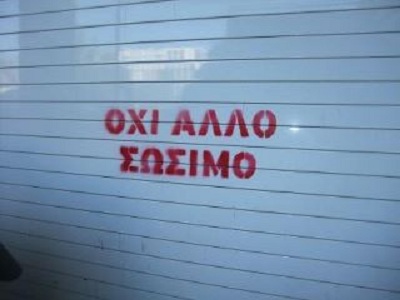
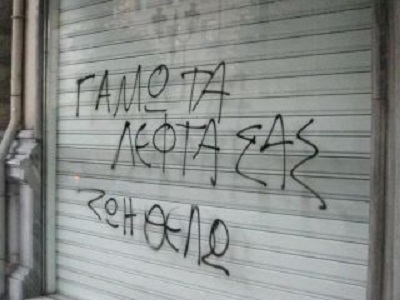
Μια σελίδα στο facebook, ‘ο τοίχος έχει τη δική του ιστορία’, αναρτά φωτογραφίες από τοίχους στην Αθήνα και άλλα μέρη της Ελλάδας. Τα συνθήματα άλλοτε σε κάνουν να γελάς, άλλοτε να θυμώνεις, άλλοτε απλά (;) προβληματίζεσαι.


Oct 112011
 

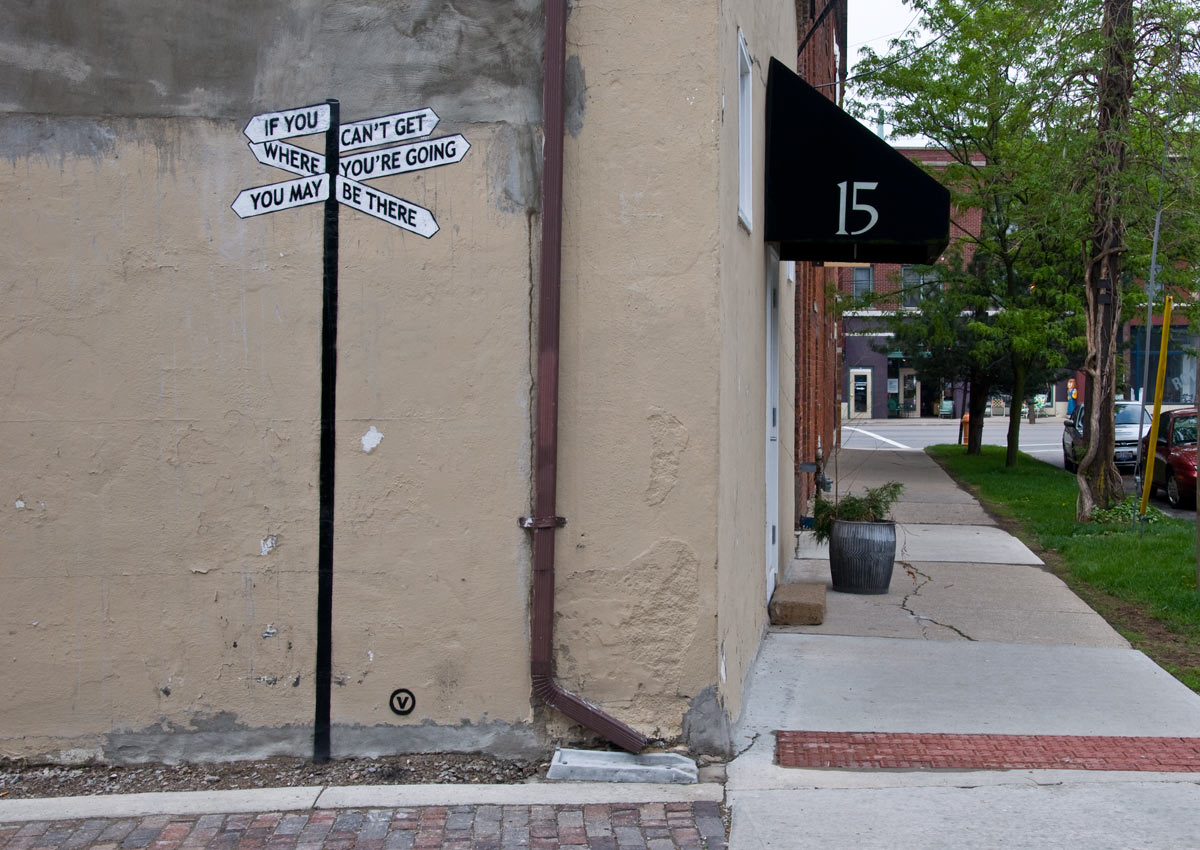
(photo www.vinchen.com)

από την Άσπρη Λέξη

Are you proud?

Ζήτησα κάποτε από ένα φίλο να με βοηθήσει και να μου πει πώς θα πάω σε έναν προορισμό για πρώτη φορά και εκείνος με ρώτησε: από που θα έρθεις, που είσαι;

Για να μάθεις πώς θα πας κάπου, πρέπει να γνωρίζεις πού βρίσκεσαι και από που έρχεσαι. Πάντα ο προορισμός είναι σχετικός με την αφετηρία, ανάμεσα τους είναι η διαδρομή. Διαφορετικές αφετηρίες, διαφορετικές διαδρομές, ακόμη και εάν ο προορισμός είναι ο ίδιος.

Θέλησα λοιπόν να καταλάβω τι συμβαίνει, να αποφασίσω τι θέλω να είμαι, που πάω και πως θα φτάσω εκεί. Με λένε τεμπέλη Έλληνα και ας δουλεύω όλη μέρα, λαμόγιο και ας μην έχω κλέψει ούτε ένα σεντς, αγενή ακόμη και όταν τους μιλάω στον πληθυντικό, καλοπερασάκια που έχω ένα ποδήλατο αλλά κανείς δεν μίλησε για την αξιοπρέπεια μου, την τιμή μου, την υπερηφάνεια μου ως άνθρωπο, όχι ως Έλληνα.

Ίσως να μην σας ενδιαφέρει αλλά πρέπει να το πω… τη μεγαλύτερη μάχη τη δίνω με τον εαυτό μου, προσπαθώ να παραμείνω άνθρωπος, δημιουργός, φίλος αλλά κάθε μέρα αναρωτιέμαι ποιος είμαι. Εσύ ποιος είσαι; Μπορείς να απαντήσεις; Είσαι άνθρωπος, φίλος, σύζυγος; Είσαι Έλληνας; Τι σημαίνει Έλληνας;

Κοίταξα γύρω μου και είδα πως και άλλοι άνθρωποι σαν και μένα που μόχθησαν, που δούλεψαν που έζησαν αξιοπρεπώς, κατάφεραν να αφήσουν τις καταθέσεις τους, όχι στο νομισματικό, αλλά σε ένα άλλο “ταμείο” αυτό της “παγκόσμιας σοφίας” παρακαταθήκη σε μένα με ένα σκοπό: να βρω τον δρόμο μου και τον προορισμό μου γιατί τώρα ξέρω την αφετηρία μου…

Το σημαντικότερο κεφάλαιο ενός κράτους είναι ο άνθρωπος. Ο άνθρωπος που μιλά τη γλώσσα του, δημιουργεί και παράγει. Παράγει και αφήνει έργο. Αφήνει έργο και φεύγει… Με αυτό πληρώνονται οι φόροι, με έργο. Αυτές είναι οι δικές μου εγγυήσεις, οι εγγυήσεις για το μέλλον, αυτή είναι η δική μου παρακαταθήκη.

Χάρης Τζαννής
Άσπρη Λέξη

Oct 092011
 

Πηγή: The Nation

Occupy Wall Street: The Most Important Thing in the World Now

Naomi Klein | October 6, 2011

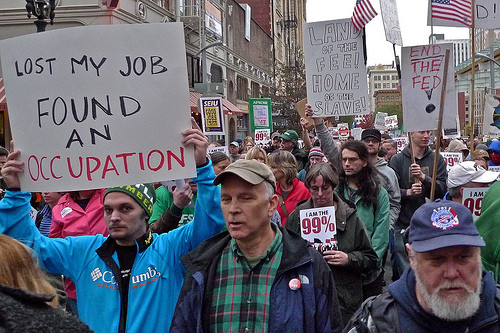
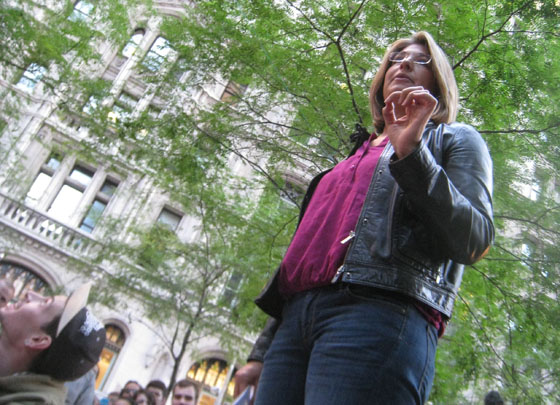
I was honored to be invited to speak at Occupy Wall Street on Thursday night. Since amplification is (disgracefully) banned, and everything I say will have to be repeated by hundreds of people so others can hear (a k a “the human microphone”), what I actually say at Liberty Plaza will have to be very short. With that in mind, here is the longer, uncut version of the speech.

I love you.

And I didn’t just say that so that hundreds of you would shout “I love you” back, though that is obviously a bonus feature of the human microphone. Say unto others what you would have them say unto you, only way louder.

Yesterday, one of the speakers at the labor rally said: “We found each other.” That sentiment captures the beauty of what is being created here. A wide-open space (as well as an idea so big it can’t be contained by any space) for all the people who want a better world to find each other. We are so grateful.

If there is one thing I know, it is that the 1 percent loves a crisis. When people are panicked and desperate and no one seems to know what to do, that is the ideal time to push through their wish list of pro-corporate policies: privatizing education and social security, slashing public services, getting rid of the last constraints on corporate power. Amidst the economic crisis, this is happening the world over.

And there is only one thing that can block this tactic, and fortunately, it’s a very big thing: the 99 percent. And that 99 percent is taking to the streets from Madison to Madrid to say “No. We will not pay for your crisis.”

That slogan began in Italy in 2008. It ricocheted to Greece and France and Ireland and finally it has made its way to the square mile where the crisis began.

“Why are they protesting?” ask the baffled pundits on TV. Meanwhile, the rest of the world asks: “What took you so long?” “We’ve been wondering when you were going to show up.” And most of all: “Welcome.”

Many people have drawn parallels between Occupy Wall Street and the so-called anti-globalization protests that came to world attention in Seattle in 1999. That was the last time a global, youth-led, decentralized movement took direct aim at corporate power. And I am proud to have been part of what we called “the movement of movements.”

But there are important differences too. For instance, we chose summits as our targets: the World Trade Organization, the International Monetary Fund, the G8. Summits are transient by their nature, they only last a week. That made us transient too. We’d appear, grab world headlines, then disappear. And in the frenzy of hyper patriotism and militarism that followed the 9/11 attacks, it was easy to sweep us away completely, at least in North America.

Occupy Wall Street, on the other hand, has chosen a fixed target. And you have put no end date on your presence here. This is wise. Only when you stay put can you grow roots. This is crucial. It is a fact of the information age that too many movements spring up like beautiful flowers but quickly die off. It’s because they don’t have roots. And they don’t have long term plans for how they are going to sustain themselves. So when storms come, they get washed away.

Being horizontal and deeply democratic is wonderful. But these principles are compatible with the hard work of building structures and institutions that are sturdy enough to weather the storms ahead. I have great faith that this will happen.

Something else this movement is doing right: You have committed yourselves to non-violence. You have refused to give the media the images of broken windows and street fights it craves so desperately. And that tremendous discipline has meant that, again and again, the story has been the disgraceful and unprovoked police brutality. Which we saw more of just last night. Meanwhile, support for this movement grows and grows. More wisdom.

But the biggest difference a decade makes is that in 1999, we were taking on capitalism at the peak of a frenzied economic boom. Unemployment was low, stock portfolios were bulging. The media was drunk on easy money. Back then it was all about start-ups, not shutdowns.

We pointed out that the deregulation behind the frenzy came at a price. It was damaging to labor standards. It was damaging to environmental standards. Corporations were becoming more powerful than governments and that was damaging to our democracies. But to be honest with you, while the good times rolled, taking on an economic system based on greed was a tough sell, at least in rich countries.

Ten years later, it seems as if there aren’t any more rich countries. Just a whole lot of rich people. People who got rich looting the public wealth and exhausting natural resources around the world.

The point is, today everyone can see that the system is deeply unjust and careening out of control. Unfettered greed has trashed the global economy. And it is trashing the natural world as well. We are overfishing our oceans, polluting our water with fracking and deepwater drilling, turning to the dirtiest forms of energy on the planet, like the Alberta tar sands. And the atmosphere cannot absorb the amount of carbon we are putting into it, creating dangerous warming. The new normal is serial disasters: economic and ecological.

These are the facts on the ground. They are so blatant, so obvious, that it is a lot easier to connect with the public than it was in 1999, and to build the movement quickly.

We all know, or at least sense, that the world is upside down: we act as if there is no end to what is actually finite—fossil fuels and the atmospheric space to absorb their emissions. And we act as if there are strict and immovable limits to what is actually bountiful—the financial resources to build the kind of society we need.

The task of our time is to turn this around: to challenge this false scarcity. To insist that we can afford to build a decent, inclusive society—while at the same time, respect the real limits to what the earth can take.

What climate change means is that we have to do this on a deadline. This time our movement cannot get distracted, divided, burned out or swept away by events. This time we have to succeed. And I’m not talking about regulating the banks and increasing taxes on the rich, though that’s important.

I am talking about changing the underlying values that govern our society. That is hard to fit into a single media-friendly demand, and it’s also hard to figure out how to do it. But it is no less urgent for being difficult.

That is what I see happening in this square. In the way you are feeding each other, keeping each other warm, sharing information freely and proving health care, meditation classes and empowerment training. My favorite sign here says, “I care about you.” In a culture that trains people to avoid each other’s gaze, to say, “Let them die,” that is a deeply radical statement.

A few final thoughts. In this great struggle, here are some things that don’t matter.

  • What we wear.
  • Whether we shake our fists or make peace signs.
  • Whether we can fit our dreams for a better world into a media soundbite.

And here are a few things that do matter.

  • Our courage.
  • Our moral compass.
  • How we treat each other.

We have picked a fight with the most powerful economic and political forces on the planet. That’s frightening. And as this movement grows from strength to strength, it will get more frightening. Always be aware that there will be a temptation to shift to smaller targets—like, say, the person sitting next to you at this meeting. After all, that is a battle that’s easier to win.

Don’t give in to the temptation. I’m not saying don’t call each other on shit. But this time, let’s treat each other as if we plan to work side by side in struggle for many, many years to come. Because the task before will demand nothing less.

Let’s treat this beautiful movement as if it is most important thing in the world. Because it is. It really is.

Editor’s Note: Naomi’s speech also appeared in Saturday’s edition of the Occupied Wall Street Journal.


Oct 052011
 

Αναδημοσίευση από το Ψυχο-Δρόμιο. Άρθρο του συνάδελφου Απόστολου Σαμπαζιώτη που αξίζει μια ανάγνωση και μπόλικη σκέψη.

…και την ίδια στιγμή, η πείνα, η ανέχεια, η ανεργία, ο τρόμος απέναντι στη νεύρωση, είναι φορές που δυναμώνει την αλληλεγγύη, σφυρηλατεί τις σχέσεις

στο κλουβί της συλλογικής μας νεύρωσης

Νεύρωση. Μία λέξη με ιστορία 250 ετών. Άγχος, φοβίες, κατάθλιψη, υποσυνείδητο κι άλυτες συγκρούσεις.. Ο Freud κι ο Jung μας μίλησαν πολύ τον 20ο αιώνα για τη νεύρωση. Κάποια στιγμή οι ψυχίατροι του DSM αποφάσισαν να μη χρησιμοποιούν πια τη συγκεκριμένη λέξη στην ψυχιατρική διάγνωση.

Τι εννοούμε όταν μιλάμε (ή μιλούσαμε) για νεύρωση, όμως; Μπορεί να αναφερόμαστε σε μια κρίση άγχους, μια κρίση πανικού, μια εμμονή. Μήπως όμως η νεύρωση δεν είναι απλά μια ταμπέλα που αφορά τους «άλλους»; Ίσως κανείς μπορεί να αναγνωρίσει στη λειτουργία της νεύρωσης, κοινά στοιχεία και με καταστάσεις και καθημερινά βιώματα που αντιμετωπίζουμε όλοι, διαγνωσμένοι και μη. Υπάρχουν ίχνη, πτυχές, αίσθηση νεύρωσης στην καθημερινότητα όλων μας. Ας μη χαρίσουμε τη νεύρωση στην ψυχιατρική, λοιπόν. Άλλωστε, αυτά τα χρόνια στο ΨυχοΔρόμιο συνειδητά έχουμε αποφύγει να χρησιμοποιήσουμε με έναν εύκολο τρόπο διαγνωστικές ταμπέλες και ονόματα που δαιμονοποιούν τον ψυχικό πόνο.

Ας δούμε κάποια από τα χαρακτηριστικά της νεύρωσης, για παράδειγμα τη διαταραχή πανικού.

  • Τα συμπτώματα των κρίσεων πανικού εκδηλώνονται ξαφνικά, σε ουδέτερο χρόνο και χώρο και εκεί που δεν τα περιμένουμε. Βιώνεται ως μία κατάσταση, ένα αίσθημα στον οργανισμό το οποίο εισβάλλει στη ζωή μας από το πουθενά.
  • Τα συμπτώματα έχουν τα χαρακτηριστικά φυσικού φαινομένου. Πολλές φορές περιγράφονται σαν ένας σεισμός. Δεν μπορείς να προβλέψεις πότε και πώς θα εκδηλωθούν και νιώθεις ότι δε μπορείς να κάνεις τίποτα για αυτό, ότι σε ξεπερνά.Σχολιάζοντας παλιότερη ανάρτησή μας για τη διαταραχή πανικού, αναφέρει μια αναγνώστρια: είναι ένα βασανιστικό συναίσθημα, που έρχεται κατά καιρούς και ανατρέπει τη ζωή μου!!!
  • Για να μπορέσεις να διαχειριστείς αυτό που σου συμβαίνει, αναγκάζεσαι να αλλάξεις συνήθειες και συμπεριφορές, να φορέσεις μια μάσκα, να αλλάξεις πρόσωπο.Χαρακτηριστική είναι η ακόλουθη μαρτυρία: «Όταν μου πρωτοσυνέβη, άρχισα να μην πηγαίνω πουθενά από το φόβο ότι θα με ξαναπιάσει κρίση, αποκόπηκα από φίλους και συνήθειες.. άρχισα να βλέπω τη ζωή μου να καταρρέει.»
  • Και τέλος, αυτά τα συμπτώματα καταφέρνουν να μας κλέβουν το χρόνο. Να μη μας αφήνουν να ζήσουμε στο παρόν και να απολαύσουμε αυτό που έχουμε, να χαρούμε. Αντίθετα, ζούμε περιμένοντας πότε θα μας περάσει, πότε θα είναι καλύτερα τα πράγματα.

Αντιγράφω άλλο σχόλιο στην προηγούμενή μας ανάρτηση: «..επειδή για 9 χρόνια έκανα το λάθος να μη απευθυνθώ σε ειδικούς λόγω ντροπής, έχασα τα καλύτερα χρόνια της ζωής μου!!!»

Ας αναλογιστούμε για λίγο… μπορούμε να αναγνωρίσουμε αντίστοιχα χαρακτηριστικά με αυτά της νεύρωσης, για παράδειγμα στο εργασιακό μας περιβάλλον, ιδίως τον τελευταίο ενάμιση χρόνο; Η συνεχής ανασφάλεια για το αύριο, η αγωνία αν θα έχεις τα απαραίτητα για να ζήσεις, το διαρκές για κάποιους πια άγχος της απόλυσης και της ανεργίας, η απογοήτευση στην διεκδίκηση εργασίας, ο πόνος, η ματαίωση, οι εργασιακές συνθήκες σκλαβιά… Πόσο εύκολο είναι να αναγνωρίσει κανείς ομοιότητες με τα χαρακτηριστικά μιας «νεύρωσης» που έρχεται από το πουθενά και κατακλύζει τα πάντα, απέναντι στην οποία νιώθει κανείς αβοήθητος;

Κάποιες φορές, δεν αναγκάζεται άραγε κανείς να φορέσει μια μάσκα, να υποδυθεί ένα ρόλο, όταν έρχεται αντιμέτωπος με τη δυναμική μιας σχέσης ή μιας κατάστασης παγιωμένης χρόνια, όταν πχ ενήλικος πια βρίσκεσαι με τη γονεϊκή σου οικογένεια και βιώνεις καταστάσεις που σε κάνουν να ξανανιώθεις αβοήθητος σαν το μικρό παιδί που ήσουν χρόνια πριν και να μη μπορείς να ξεφύγεις από αυτό;

Νεύρωση μπορεί να είναι αυτό που νιώθει κανείς χρόνια εγκλωβισμένος σε μία σχέση που δεν του κάνει καλό, που τον κακοποιεί, τον πληγώνει. Νεύρωση μπορεί να είναι να κουβαλάς αυτά που πιστεύουν και σκέφτονται και περιμένουν οι άλλοι για σένα, οι γονείς, οι δάσκαλοι, οι σύντροφοι, τα παιδιά, η κοινωνία, το αφεντικό σου… Νεύρωση μπορεί να είναι να υπομένεις την κακοποίηση, να ρουφιέσαι από τον παραλογισμό του εργοδότη, του υπουργού, της αστυνομίας, της τρόικας, του γείτονα, του γονιού…

Όλες αυτές οι καταστάσεις, ό,τι όνομα και να τους δώσουμε, και σε μεγάλο βαθμό αυτό που ζούμε τον τελευταίο καιρό στην Ελλάδα και ίσως σιγά-σιγά σε όλο τον «δυτικό κόσμο», μοιάζει με ένα φυσικό φαινόμενο, το οποίο εισβάλλει στη ζωή μας ξαφνικά από το πουθενά και την ανατρέπει, χωρίς να νιώθουμε ότι μπορούμε να κάνουμε κάτι. Και μας κάνει να φοράμε μια «μάσκα», να αλλάζουμε κι ακόμα μας κλέβει το χρόνο… δεν ευχαριστιόμαστε, αλλά περιμένουμε αν και πότε θα περάσει.

Στην ψυχοθεραπεία, ο θεραπευόμενος οδηγείται στο να ανακαλύψει μέσα του τις πηγές που μπορούν να τον βοηθήσουν να αναπλαισιώσει το «πρόβλημά του», τις συμπεριφορές του, τον εαυτό του. Να ξαναδιαβάσει, όπως λέμε, την ιστορία του. Θα μπορούσε άραγε κάτι αντίστοιχο να μας βοηθήσει τώρα που βρισκόμαστε ενώπιον μιας συλλογικής – όχι κλινικά διαγνωσμένης – «νεύρωσης»;

Ένα από τα πρώτα βήματα στη θεραπευτική διαδικασία είναι αυτό που ονομάζουμε «στροφή στον εαυτό», να μπορέσει κανείς να κοιτάξει μέσα του. Όσο δύσκολο κι αν είναι, αυτή την περίοδο, το να κοιτάξω μέσα μου, να αναρωτηθώ τι θέλω, τι νιώθω, πώς θέλω να ζω, να δουλεύω… ποιο είναι το προσωπικό μου νόημα στις επιλογές μου, με βοηθάει να μπορώ να διαχωριστώ από όλο αυτό που συμβαίνει τριγύρω μου. Πόσο δικά μου είναι αυτά που κάνω, οι επιλογές μου, τα θέλω μου, ή πόσο είναι κάτι που μου έχει «φορεθεί» ή που έχω μάθει να το κάνω τόσα χρόνια ή που κάποτε κάτι εξυπηρετούσε να το κάνω και τώρα μπορώ να το αλλάξω. Να δει κανείς τα δικά του όρια, τι απολαμβάνει, τι μπορεί να κάνει για τον εαυτό του. Να διαφοροποιηθεί.

Είτε αυτό σημαίνει να αναζητήσω το νόημα στο να κάνω τη δουλειά μου όσο σωστά την κάνω και τώρα που είμαι απλήρωτος ή κακοπληρωμένος. Είτε σημαίνει ακόμα κι αν μείνω άνεργος να ξέρω τι είναι αυτό που μου δίνει νόημα να κάνω, με τι θέλω να γεμίσω τη μέρα μου, τη ζωή μου και κατά πόσο με καταβάλλει η απογοήτευση και η απελπισία..

Κι όπως και στη νεύρωση, προσπαθούμε να αποβάλλουμε αυτό το προσωπείο που αναγκαζόμαστε να φορέσουμε, για παράδειγμα του υποχόνδριου που δεν μπορεί να ακουμπήσει σε μια «άγνωστη» επιφάνεια, ή του αγοραφοβικού που αναγκάζεται να κλείνεται στο σπίτι και να σταματάει η κανονική ροή της ζωής του, έτσι και στην περίπτωση αυτής της συλλογικής νεύρωσης χρειάζεται αυτή η προσπάθεια να αλλάξουμε αυτό το προσωπείο της συλλογικής κατάθλιψης που μας φοριέται. Σίγουρα αυτές οι αλλαγές που συμβαίνουν τον τελευταίο καιρό μας έχουν σοκάρει, μας πονάνε, μας ακινητοποιούν. Ωστόσο είναι στο χέρι μας να αναρωτηθούμε: αυτό το προσωπείο του «καταθλιπτικού έλληνα της κρίσης» είναι δικό μου; Έτσι θέλω να ζω; Μπορώ να βγω από αυτό; Μπορώ μόνος μου να αμφισβητήσω τη «νεύρωση», να σταματήσω να ρουφιέμαι από αυτήν και να πιστέψω ότι μπορώ να κάνω κάτι για αυτό; Κι αν δεν μπορώ, ποιος μπορεί να με βοηθήσει να διαμορφώσω τις συνθήκες;

Φτωχαίνω, έχασα τη δουλειά μου, δεν έχω να πληρώσω χαράτσια και λογαριασμούς, παντού ακούω πόσο άσχημα είναι τα πράγματα και πόσο χειρότερα θα γίνουν. Τι μπορώ να κάνω; Για τον καθένα αυτό είναι διαφορετικό κι έχει να κάνει με τα θέλω του, με τις δυνατότητές του, με το προσωπικό του νόημα στη ζωή. Μπορεί να είναι από το να αναζητήσω μια άλλη δουλειά, να αλλάξω τρόπο ζωής, να επιλέξω από πού ενημερώνομαι, τι συζητάω και με ποιους, μέχρι το να πάω να ζήσω σε έναν άλλο τόπο, να μεταναστεύσω, να μάθω να ζω με λιγότερα, να αναζητήσω άλλους ανθρώπους που περνούν το ίδιο με μένα, να διεκδικήσω, να βγω στο δρόμο, να συναντήσω κόσμο, να κάνω κάτι…

Η περίοδος που περνάμε, μέσα στη δυσκολία της, μας προσφέρει μια μοναδική ευκαιρία να απευθυνθούμε στους ανθρώπους γύρω μας, μιας και η δυσκολία, ο πόνος αφορά όλο και περισσότερους πια. Είναι ευκαιρία να συναντηθούμε: βλέπει κανείς ολοένα και περισσότερα δίκτυα να αναπτύσσονται, είτε σε πλατείες είτε σε χώρους εργασίας είτε σε πανεπιστήμια και γειτονιές, ακόμα και διαδικτυακά. Και την ίδια στιγμή, η πείνα, η ανέχεια, η ανεργία, ο τρόμος απέναντι στη νεύρωση, είναι φορές που δυναμώνει την αλληλεγγύη, σφυρηλατεί τις σχέσεις.

Τώρα που χάνουμε πολλά, ας προσπαθήσουμε να κρατήσουμε τον εαυτό μας και να τον φροντίσουμε, διαφορετικά το «κλουβί της νεύρωσης», ατομικής και κοινωνικής μπορεί να μας παγιδέψει, χάνοντας έτσι την ζωή μας.

Oct 042011


Αν κάνουμε λίγη υπομονή, μέχρι να καταλάβουμε καλά τι δεν θέλουμε, έχουμε ελπίδες να καταφέρουμε και αυτό που θέλουμε; Ο Τάρικ Άλι, υποστηρίζει πως ναι.

Η εύκολη απάντηση είναι ότι δεν θέλουμε την απληστία, την αδικία, την παραβίαση κάθε δικαιώματος. Είμαστε σίγουροι ότι ξέρουμε ποιοι τα εκπροσωπούν αυτά; Δεν είναι μόνο θεσμικοί οι εκπρόσωποι. Είναι και δυναμικές στις σχέσεις, μέσα σε κάθε μικρή και μεγάλη κοινότητα. Εκεί, είναι εξ ίσου δύσκολη η αλλαγή, όσο και στο άλλο επίπεδο, το θεσμικό.

Οι αλλαγές που προσπαθούμε να κάνουμε είναι βαθιά προσωπικές και ταυτόχρονα ευρέως θεσμικές και κοινωνικές.

Ενάντια στο Ακραίο Κέντρο

του Τάρικ Άλι

Μετά το ελπιδοφόρο φτερούγισμα του Ουισκόνσιν, μπορούμε άραγε να μιλάμε για την αρχή ενός «αιγυπτιακού» καλοκαιριού στη Νέα Υόρκη; Γιατί η άνοιξη έχει φύγει καιρό από την καρδιά της πολιτικής στην Αμερική. Οι πάγοι από τους χειμώνες των Ρήγκαν και Μπους δεν έλιωσαν με τους Κλίντον και Ομπάμα: κούφιοι άνδρες κυβερνούν ένα κούφιο σύστημα, όπου το χρήμα κυριαρχεί και το κατά τα λοιπά κακόφημο κράτος χρησιμοποιείται για τη διατήρηση του χρηματοπιστωτικού στάτους κβο και τη χρηματοδότηση των πολέμων του 21ου αιώνα.

Η συζήτηση, η σοβαρή διαμάχη και η ανοιχτή λογική έχουν εξαφανιστεί από την παραδοσιακή πολιτική ζωή στις ΗΠΑ, αλλά και στις πιο ακραίες εκδοχές τους στην Ευρώπη – εδώ η Βρετανία ανοιγοκλείνει τη στρόφιγγα του βυτίου. Η άκρα δεξιά είναι πολύ μικρή. Η άκρα αριστερά ίσα που υπάρχει. Είναι το ακραίο κέντρο που κυριαρχεί στην πολιτική και οικονομική ζωή.

Συνειδητά ή ασύνειδα, όσοι συμμετέχουν στις διαμαρτυρίες του Occupy Wall Street διαδηλώνουν ενάντια σε ένα δεσποτικό σύστημα υπό την κυριαρχία του χρηματιστικού κεφαλαίου – αυτού του αδηφάγου βρυκόλακα που πρέπει να ρουφάει το αίμα των μη πλούσιων για να επιβιώσει. Οι διαδηλωτές δείχνουν την περιφρόνησή τους για τους τραπεζίτες, τους κερδοσκόπους και τα έμμισθα φερέφωνά τους στα ΜΜΕ, που επιμένουν ότι δεν υπάρχει εναλλακτική λύση.

Οι νέοι που η αστυνομία της Νέας Υόρκης ψεκάζει με πέπερ-σπρέι μπορεί να μην έχουν επεξεργασίες γι΄ αυτό που θέλουν. Ξέρουν όμως τι στα κομμάτια δεν θέλουν. Αυτό είναι μια σημαντική αρχή.

Πηγή: London Review of Books (μετάφραση από το Red Notebook)


Sep 272011
 

Πρωτοχρονιά για τους Εβραίους, και ο Ραββίνος Brant Rosen αναρωτιέται αν το Εβραϊκό κατεστημένο είναι ικανό να ακούσει τη φωνή των νέων. Δες το βίντεο και άκουσε τη φωνή τους. Είναι δυνατή, είναι αποφασισμένη. Είναι η φωνή μιας νεολαίας που συγκινεί και δίνει ελπίδα. Μακάρι να γίνει και δική μας φωνή, για τα αντίστοιχα ‘δικά μας’ θέματα, εκεί που η κυρίαρχη φωνή στην Ελλάδα και η περίεργη εμμονή να νομίζουμε ότι όλοι είναι Χριστιανοί Ορθόδοξοι (ή θα έπρεπε να είναι!) στερεί από ανθρώπους το δικαίωμα της πίστης με αξιοπρέπεια, της ζωής με δικαιώματα.


Sep 232011
 

Καταιγισμός από νέα μέτρα. Πριν προλάβουν καν να εφαρμοστούν τα ‘παλιά.’ Ο μεγαλύτερος κίνδυνος είναι η ψυχολογική παράλυση. Ο φόβος δημιουργεί περίεργες δυναμικές. Αν γίνει μόνιμη κατάσταση, γίνεσαι επιρρεπής σε αυτόκλητους σωτήρες, χάνεις την ικανότητα για κριτική σκέψη, χάνεις επαφή με την εσωτερική σου δύναμη και τις εναλλακτικές σου. Ο οδηγός επιβίωσης έχει μια λέξη μόνο για σήμερα: αλληλεγγύη. Μην αφήσεις το φόβο σου να σε κλείσει στο καβούκι σου. Δημιούργησε κοινότητες, θρέψε αυτές που ήδη έχεις, επίτρεψε στον εαυτό σου να αποσταθεροποιηθείς χωρίς να γκρεμιστείς, αναρωτήσου για όλα αυτά που θεωρούσες δεδομένα. Και πρόσεχε τις εύκολες απαντήσεις στην ερώτηση ‘ποιος φταίει;’. Ποτέ πριν στην ιστορία του τόπου μας η έννοια της ‘προσωπικής ευθύνης’ δεν έχει χρησιμοποιηθεί τόσο χειριστικά, για να αποδυναμώσει ανθρώπους, αντί να διευρύνει ορίζοντες και να στηρίξει ειλικρινή διάλογο.